
RYTHM Foundation launches INDEP as a national benchmark for equality, culture, and sustainability empowerment.
KUALA LUMPUR, 1 AUGUST 2025 — As national debate grows in Malaysia over the future of indigenous rights, RIMBA Fest 2025 concluded today with a powerful message: True inclusion means redistributing power and not just offering a seat at the table.
Ahead of World Indigenous Day (August 9), the festival organised by the QI Group of Companies’ social impact arm, RYTHM Foundation, brought together stakeholders from across Malaysia to centre the voices and solutions of indigenous communities at a critical time when calls for greater grassroots participation in policy reform have been growing louder.
In response to the latest public plea for more inclusive lawmaking processes, RIMBA Fest 2025 offered a working model of community-led development, shaped by a three-year journey through RYTHM’s Community Adoption Programme (CAP), which will now be expanded under the newly launched Indigenous People’s Development Programme (INDEP).
Speaking at Rimba Fest, Datin Seri Umayal Eswaran, Chairperson of RYTHM Foundation, said, “Today, we gather not only to celebrate the rich culture and heritage of the Orang Asli, but to bring their voices and stories, which are so often left unheard, to the forefront.
“At RYTHM Foundation, we don’t believe in episodic aid. We are committed to long-term, community-led solutions grounded in dignity and designed with, not for, the Orang Asli,” she added.
The new INDEP logo, a symbol of empowerment for Malaysia’s indigenous communities, was also launched at the event.
Turning Advocacy into Action
Since 2021, the CAP, spearheaded by the Foundation, has redefined empowerment for Malaysia’s Orang Asli and Orang Asal communities. Moving beyond traditional aid, CAP has ignited a paradigm shift: transforming local communities from recipients into co-creators of their own sustainable futures.
Through tailored, locally-led initiatives, for example, in education, economic resilience, youth and women leadership, and grassroots advocacy, has evolved into tangible, indigenous-led progress.
“Our work with Orang Asli communities is not a programme, it is a promise. A promise of equity, dignity, and shared progress,” affirmed Datin Seri Umayal, underscoring RYTHM’s commitment.
Key outcomes of the programmes include:
- Education and Literacy: RYTHM has provided after-school tutoring and indigenous-led learning in Sabah, Pahang, Kedah, and Negeri Sembilan, from Sekulah Bateq (Bateq School) in Pahang to PANAI 3M in Sabah.
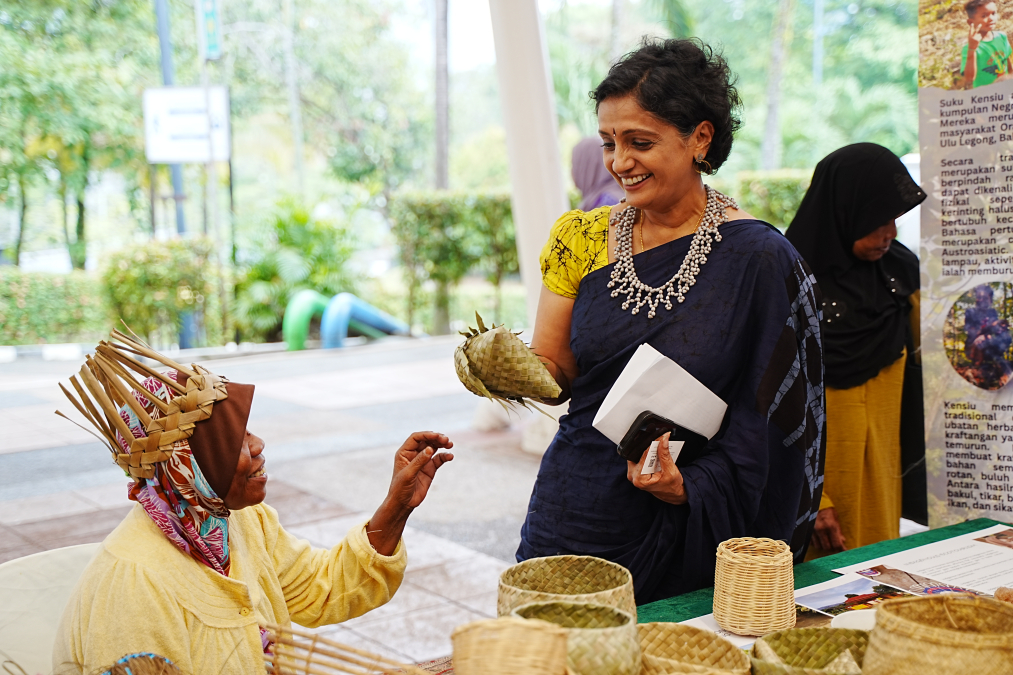
- Economic Empowerment: Partnerships with USM and IIUM Pagoh have supported digital entrepreneurship and ecotourism initiatives with the Kensiu and Jakun communities in Kedah and Johor.
- Women and Youth Leadership: In Ranau, Sabah, RYTHM facilitated mentorship platforms and civic engagement opportunities, empowering indigenous women and youth to lead dialogue with policymakers.
- Cultural Preservation: All initiatives embed local languages, traditions, and identities, ensuring empowerment is not at the expense of heritage, but in service of it.
While celebrating these milestones, Datin Seri Umayal highlighted the Foundation’s deeper mission: “Projects can touch lives, but only policy can change systems. That is why we advocate, co-create, and partner across sectors — to deliver impact that reshapes futures.”
This holistic approach ensures advocacy becomes action, dignity replaces dependency, and progress is measured not in outputs but self-determined legacies.
INDEP as a Scalable National Benchmark
The introduction of INDEP marks a calculated move from pilot programmes to a scalable, national Indigenous development model. Based on the lessons learned from CAP, INDEP is made to meet the unique needs of every community while producing quantifiable results.
“In the next ten years, our goal is not just to support Orang Asli communities, but to co-create systems that honour their knowledge, protect their land, and build their futures,” said Santhi Periasamy, the Head of RYTHM Foundation.
Santhi further emphasised: “No single sector can solve systemic exclusion alone. But together, through public, private, and civil society collaboration, we can rewrite the narrative of indigenous empowerment.”
Modular in nature, INDEP aids with leadership development pipelines, eco-enterprise, and literacy programs. RYTHM actively seeks to collaborate with NGOs, academic institutions, corporate CSR arms, and government agencies to expand the programme nationwide.
“For us, the empowerment of Orang Asli communities is not a seasonal project but a long-term commitment grounded in dignity, partnership, and justice,” Santhi continued.
A Blueprint for Inclusive Reform
The unveiling of the INDEP logo at RIMBA Fest transcended symbolism. It marked the evolution of grassroots innovation into a national framework for empowering Orang Asli communities.
Built on three years of proven impact through the CAP, INDEP offers Malaysia a collaborative pathway grounded in respect, recognition, and shared power as the nation advances Orang Asli rights and representation.
The initiative’s transformative power resonates in stories like that of CAP Kedah’s malim gunung (mountain ranger) participant Zulkifli Bin Kulim: “I used to think life in the forest was just ordinary — I never knew guiding others through it could be a career. This camp opened my eyes and made me realise that something so familiar could become meaningful and valuable.”
Similarly, teacher’s assistant Wati Binti Tero witnesses its ripple effects: “It’s amazing to see how children who once struggled to read are now recognising letters and slowly learning to read — all because someone believed in giving them a chance.”
As INDEP scales, RYTHM Foundation invites all sectors — government, private, and civil society — to forge a future where inclusion means co-creation, not consultation. True progress begins when communities lead it.