


Thanks to the rise of artificial intelligence, cloud computing, and green technologies, the digital economy is transforming the future of work and opportunity. Yet despite this rapid growth, many girls in tech in Southeast Asia still face significant barriers to accessing digital skills and STEM pathways shaping tomorrow’s world.
According to the e-Conomy SEA 2023 report, the region’s digital economy is projected to reach US$1 trillion by 2030.
However, behind this rapid growth lies a widening gap—one that risks leaving many girls behind in the industries driving Southeast Asia’s future.
Barriers to Girls’ Participation in Southeast Asia’s Digital Economy
To be clear, headway has been made in the technology sector in recent years.
For example, according to a 2024 study by Boston Consulting Group, women hold 34-40% of tech roles across Southeast Asia. This marks a moderate shift from 2020 figures, and is above the global average of 28%.
Yet, progress remains slow and uneven. And the reasons for this aren’t just technical; they are also systemic and deeply rooted. Some of the most significant factors include:
-
- Cultural Norms and Gender Stereotypes — According to UNESCO, girls make up only 35% of STEM students globally and just 3% of ICT graduates. The cause? Biased perceptions of what girls are “suited” for, which then leads many to internalise the belief that they are not good at tech.
- Limited Access to Digital Tools — The digital divide remains a problem in Southeast Asia. According to a 2021 UNICEF report, not only do 60% of children in the region lack reliable internet access, but girls in rural areas are disproportionately affected. As a result, many are unable to build foundational digital skills, thus widening the gap before it can even be addressed.
- Lack of Female Role Models in STEM — Girls may also not envision themselves as working in tech. According to UNESCO, women hold only 20–25% of tech roles in major machine learning companies. So, even when interest exists, the lack of visible role models could discourage girls from pursuing STEM pathways.
- Safety Concerns Around Online Spaces and Digital Literacy — Opportunities aside, the World Bank notes that girls are more likely to face online harassment. This can not only hinder their active participation in the field but also limit their confidence in navigating online environments.
Ultimately, each of these barriers limits girls’ potential. And taken together, they reinforce the cycle of under-representation and severely constrain Southeast Asia’s ability to build a truly inclusive, future-ready workforce.
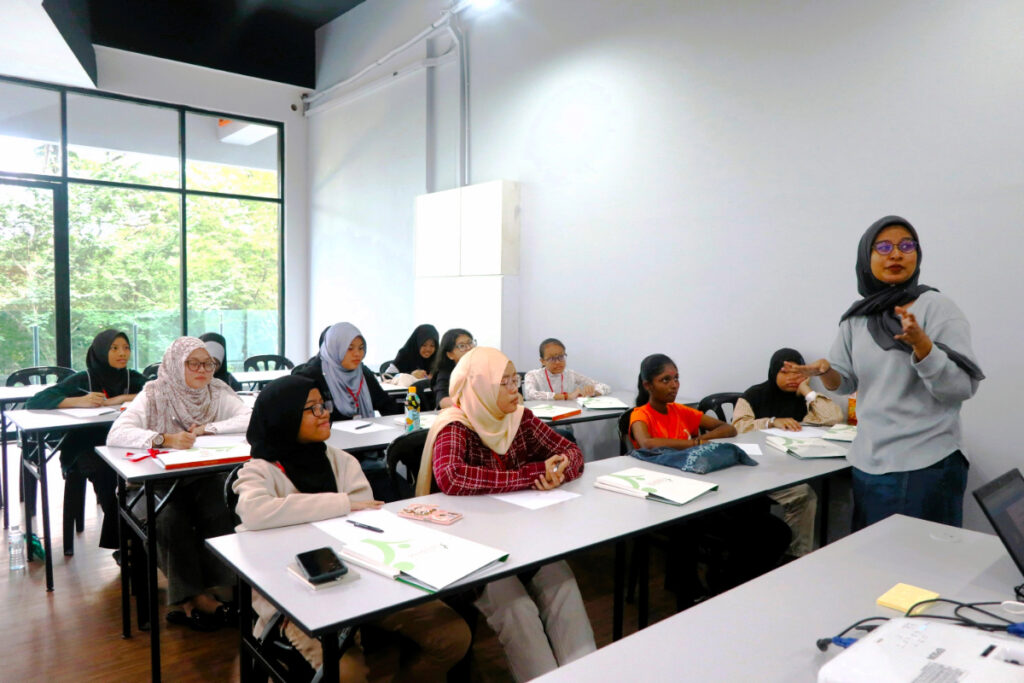
How Maharani Learning Lab is Empowering Girls with Digital Skills
Ensuring girls are included, therefore, isn’t optional but critical. And on a community level, the impact can be even more profound and transformative.
In response, targeted interventions have emerged to help girls access digital education and skills training.
One such initiative is RYTHM Foundation’s Maharani Learning Lab (MLL), which reflects the organisation’s broader commitment to inclusive education and community development.
Initially launched in 2015, with a learning centre in Perak, Malaysia, the initiative has helped hundreds of girls to date — especially those from low‑income, rural or at‑risk backgrounds — become more independent and digitally literate.
Designed as a safe, structured, after‑school learning programme, Maharani Learning Lab equips teenage girls aged 13-16 with practical digital and STEM skills.
This includes hands-on training in coding, electronics, and 3D design, as well as in software such as Microsoft Office, and personal development initiatives that focus on enhancing self-awareness, confidence, communication, and leadership skills, holistically complementing the digital skills for girls.
As a result, girls not only gain a deeper understanding of digital skills and STEM, but also how these skills can translate to future opportunities — from employment and entrepreneurship to higher education and financial independence.
Building a Future-Ready Southeast Asia Through Girls in Tech
At the end of the day, as Southeast Asia moves towards a tech‑driven future, empowering girls with STEM skills is not just a social priority but a strategic investment in the region’s future.
This is because when girls access these opportunities, they grow into innovators and leaders who strengthen entire communities and contribute meaningfully to the digital economy.
For RYTHM Foundation, this means creating pathways for every girl to learn, lead and thrive in an increasingly digital world.