

Community development in rural Sabah has gained new momentum with ‘Changing Lanes and Empowering Lives in the Mist,’ a 24-month initiative by RYTHM Foundation and trusted partner Good Shepherd Services (GSS).
Implemented in November last year and running through October 2027, the project serves the indigenous villages of Kampung Mangkapoh and Kampung Sinurai in Malinsau, Ranau district.
Designed to address persistent, interconnected challenges faced by low-income families, the project combines education support, food security, and women’s economic empowerment in a single, community-led framework.
Its goal is to meet immediate needs while strengthening local systems for long-term community thriving.
“The initiative reflects our belief that meaningful community development in rural Sabah must be holistic and deeply rooted in local realities,” said Shreevidya Anandan, Deputy Head of RYTHM Foundation.
“When children are supported in school, families are food-secure, and women are economically empowered, communities are better equipped to shape their own futures.”
This partnership builds on RYTHM and GSS’s long-standing collaboration through our Community Adoption Programme (CAP) in Kiulu from 2021 to 2024. The CAP supported education, youth entrepreneurship, and economic empowerment in three remote Dusun villages through school tuition, eco-tourism initiatives, and micro-enterprise backing.
The project’s success, marked by improved school performance and increased livelihood opportunities, demonstrated the power of sustained, community-led initiatives and laid the groundwork for deeper engagement in community development in rural Sabah.
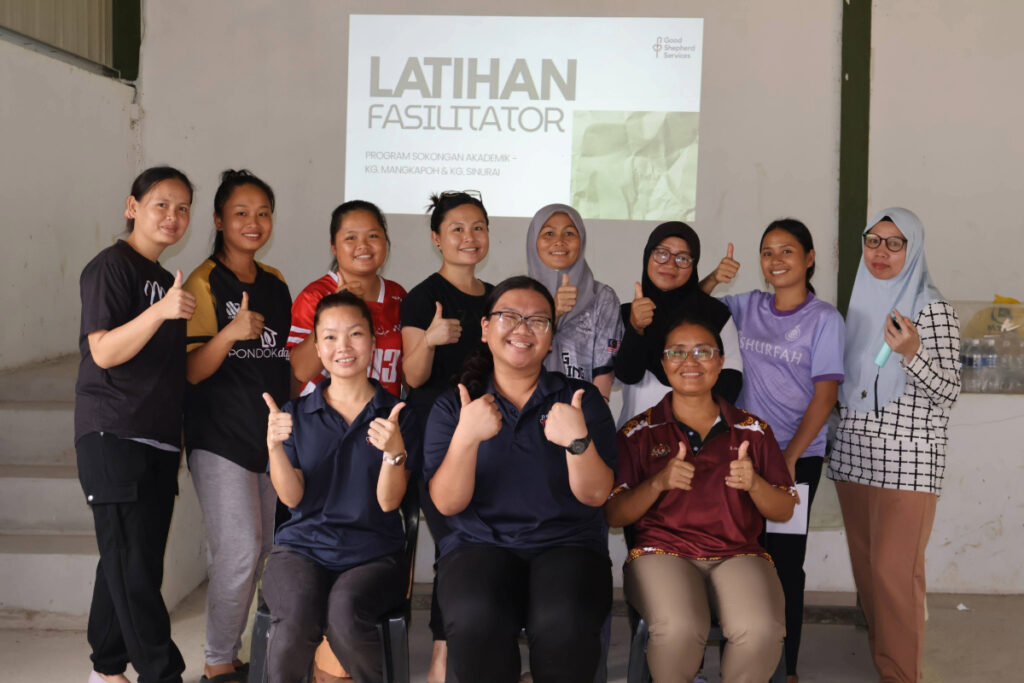
Strengthening Education for Rural Children
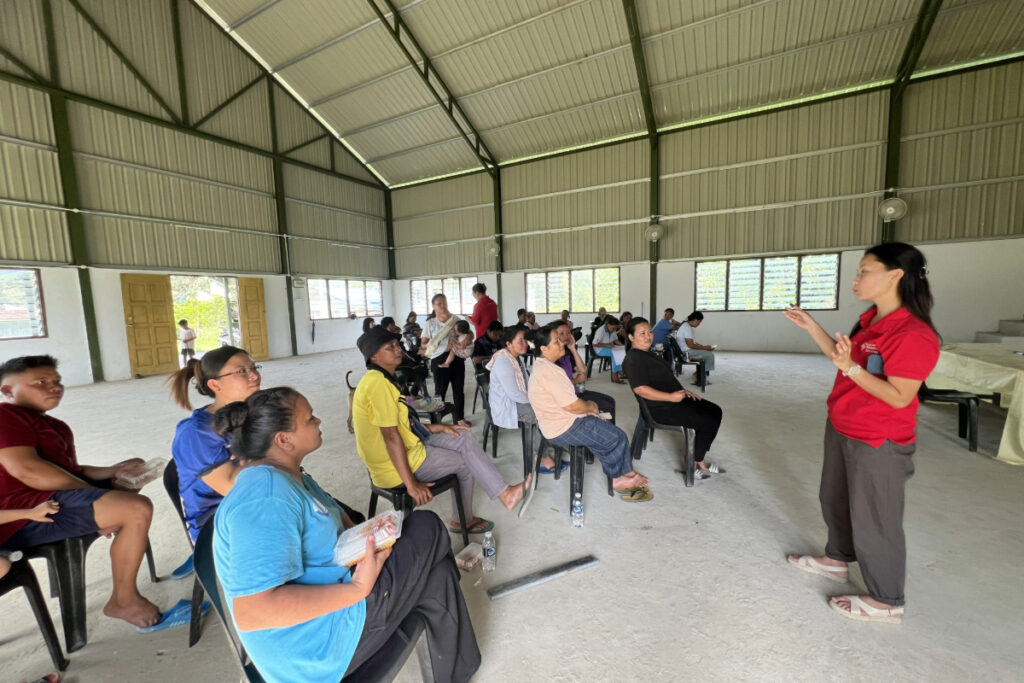
Education is the first pillar of the project, addressing literacy and numeracy gaps among the villages’ primary school children. Through after-school tuition programmes, the project will establish community-based academic support centres to help students build strong foundations in reading, writing, and arithmetic.
Crucially, these centres are overseen by locally formed community committees, ensuring ownership, accountability, and sustainability beyond the project period. By improving academic performance and school engagement, the initiative aims to support smoother transitions from primary to secondary education.
“Education is often the turning point that allows children to change lanes in life,” Shreevidya noted. “By embedding learning support within the community, we’re investing in both children and the ecosystems around them.”
Building Food Security Through Family Gardens
Recognising the close link between nutrition, learning, and household resilience, the project includes a Family Garden Programme to strengthen food security in rural households. Families will receive training and resources to cultivate sustainable home gardens that improve nutrition, reduce food costs, and potentially generate supplementary income.
This aspect also promotes environmentally responsible practices tailored to local conditions in Ranau, reinforcing long-term resilience at the household level.
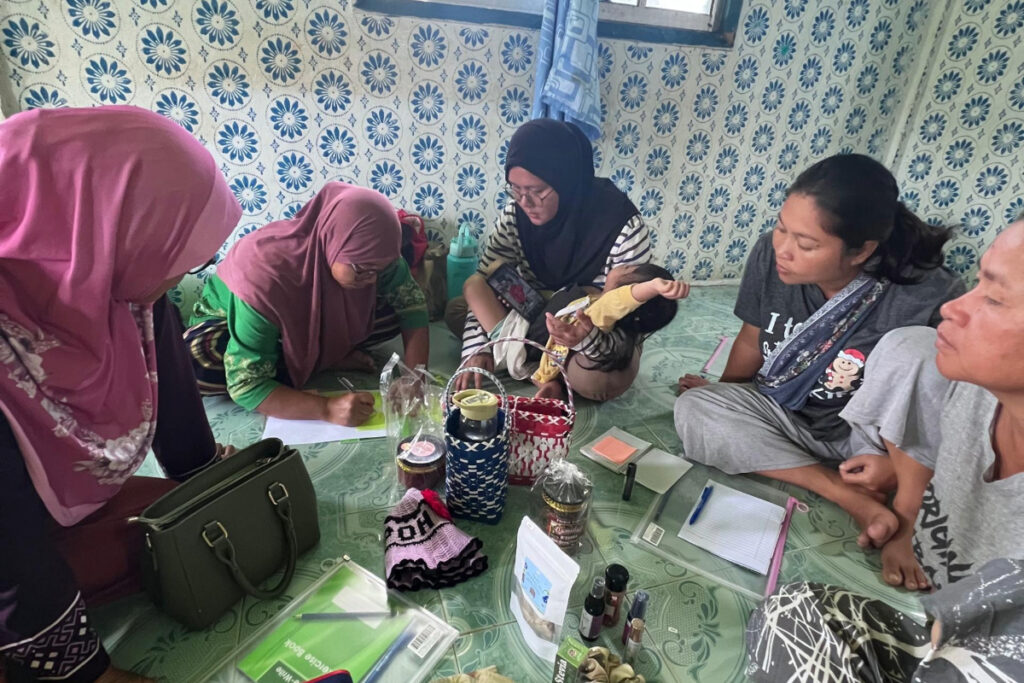
Women as Economic and Community Leaders
At the heart of this initiative is an economic empowerment programme for the women of the villages called WISE (Women in Small Enterprise). Participants take part in training in entrepreneurship, leadership, digital literacy, and product development, equipping them with practical skills to build sustainable, community-based livelihoods.
By supporting women in developing community-based, income-generating products and exploring cooperative business models, the project aims to strengthen household incomes while enhancing women’s leadership and decision-making roles.
When women gain economic confidence and leadership skills, the ripple effects are felt across families and communities. “This project recognises women as key drivers of long-term change,” Shreevidya noted.
A Participatory Model for Lasting Impact
Led by GSS project lead Carolica Empin and supported by a dedicated implementation team, the project adopts a community-based participatory approach, actively involving parents, teachers, youth, women, and local leaders at every stage.
By strengthening education, food security, and women-led livelihoods, ‘Changing Lanes and Empowering Lives in the Mist’ represents a meaningful step forward in community development in rural Sabah — one that seeks to create enduring social and economic change long after the mist has lifted.